Last updated 2026-08-19
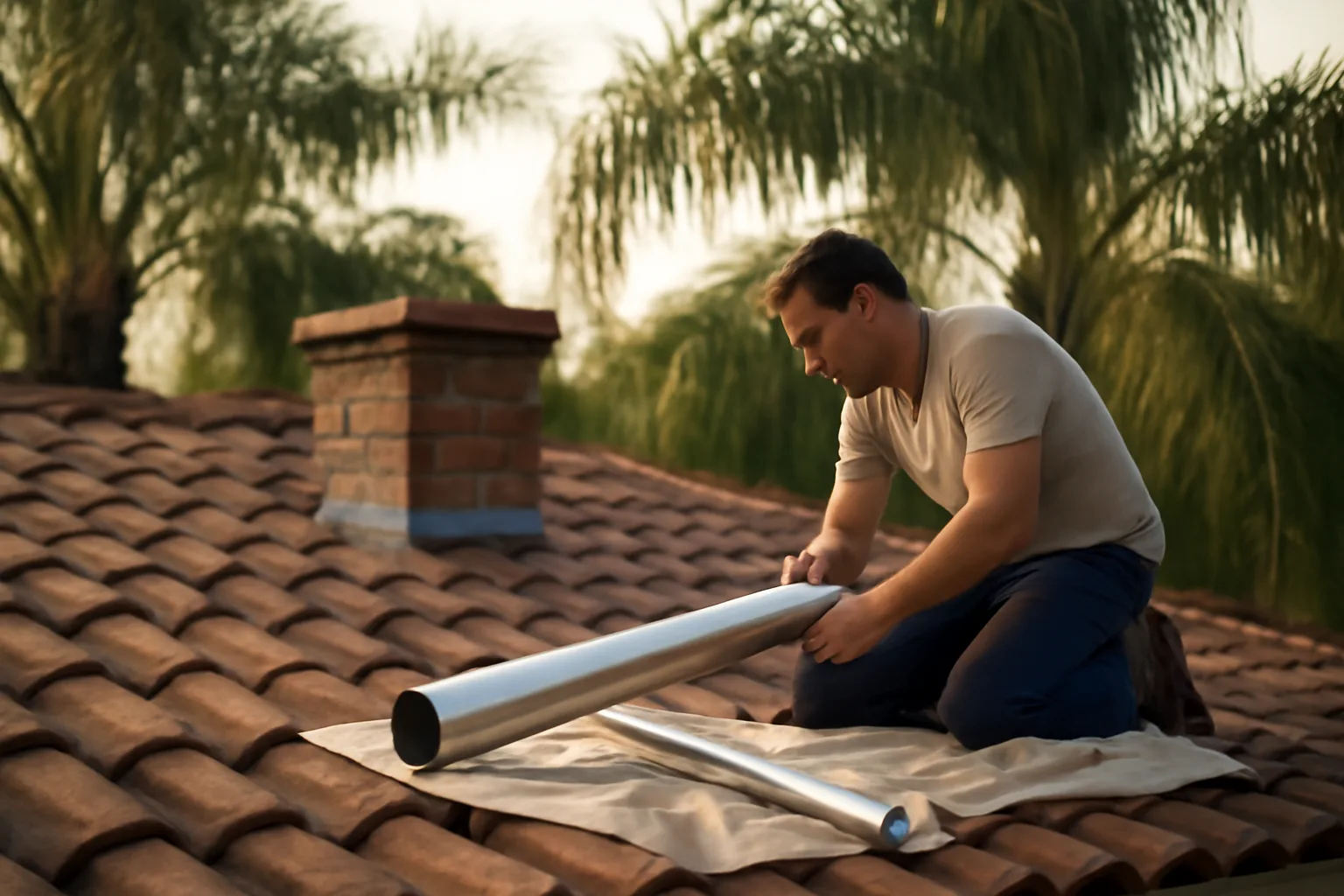
TL;DR
Florida does not issue a chimney liner license. If you get paid to install or replace liners, you generally need a certified or registered contractor license under Chapter 489, plus a local building permit. A job under $2,500 can be exempt, but advertising as a contractor or splitting a larger job kills that out. CSIA and NFI cards are not state licenses. Confirm classifications and fees with DBPR and your building department.
Do you need a license for chimney liner work in Florida?
Yes, if you get paid to install chimney liners as a business in Florida, you almost always need a contractor license. The state does not sell a card labeled chimney liner. The Construction Industry Licensing Board licenses contractors under Chapter 489, and liner work sits inside those existing classes.[3]
Florida Statute 489.113 is blunt. It says, "No person who is not certified or registered shall engage in the business of contracting in this state."[3] That sentence is the whole fight. Chimney liner Florida jobs look small from the street. They still alter a building system that carries heat, smoke, and carbon monoxide. Building officials treat that as contracting, not weekend handyman work.
I would not start a liner company on a handshake and a truck magnet. If you bid, advertise, or take compensation to install, reline, or replace a flue liner, plan on a CILB certified or registered license unless a written exemption actually fits. The casual-work exemption exists, and I cover it below. People abuse it. DBPR and local unlicensed-activity units do sting ads that say "chimney liner" and "licensed and insured" in the same breath.
Homeowners working on their own house are a different stack of paper. Florida has an owner exemption when you supervise the work yourself and you meet the statute's use and sale limits.[1] That is for your homestead, not for the neighbor's rental. If you want to work for other people, get the card.
There is no secret municipal chimney-only license that replaces Chapter 489. Some counties add a local certificate of competency on top. That is extra paper, not a substitute. Confirm the class with DBPR and with the building department that will stamp the permit. Do not let a supply house talk you into a story that "sweeps don't need a license down here." Some don't get caught. That is not a plan.
What contractor license covers chimney liner installs in Florida?
There is no statewide chimney liner license. The closest CILB classes are mechanical contractor for appliance venting and heating systems, and, in some offices, a masonry or specialty class when you are rebuilding clay tile inside a masonry chimney.[2] Ask the building official which qualifier they will accept on the permit. Get it in writing if the counter story sounds sloppy.
Florida Statute 489.105 defines the mechanical contractor around heating, ventilating, boilers, fuel piping, and the apparatus used with those systems.[2] A stainless liner that vents a furnace, water heater, or insert sits in that world. A pure fireplace reline with no appliance can get argued either way. I have watched two Florida counties split on the same scope. That is why you call the AHJ before you print flyers.
If you only rebuild masonry and clay liners, some jurisdictions want a masonry specialty or a building contractor, not a mechanical card. If you cut stainless, set a tee, connect an appliance, and leave a listed system behind, I would hold a mechanical license. I would not try to stretch a roofing card or a handyman pitch over a flue. Florida does not issue a statewide handyman license.
Registered specialties vary by county. A local registered class that mentions chimneys or sheet metal might exist where you live. It will not travel. Certified licenses travel statewide. That difference matters if you plan to work Tampa and Orlando from the same truck.
Look up the exact class name on the DBPR application list before you sit an exam.[14] People waste a year studying the wrong book. Confirm with the board. I cannot honestly tell you every county's counter will accept the same qualifier for chimney liner Florida work, because they don't.
Does the $2,500 exemption let you skip a Florida license?
Sometimes, on a tiny job you do not advertise. I would not build a company on it. Florida Statute 489.103(9) exempts work of a "casual, minor, or inconsequential nature" when the "aggregate contract price for labor, materials, and all other items is less than $2,500."[1]
Read the rest. The exemption does not apply if the small contract is a slice of a larger operation, or if you split jobs to stay under the cap. It also does not apply to a person who advertises as a contractor or represents that they are qualified to engage in contracting.[1] Your Facebook ad can wipe out the exemption before you pull a drill.
A listed stainless liner kit plus labor plus a chase cover plus a rain cap gets you over $2,500 on a lot of one-story houses. Clay tile rebuilds blow past it immediately. If the job also needs a permit, many building departments will not talk to an unlicensed bidder anyway. The exemption is a defense about contracting law. It is not a permit holiday.
My opinion: use the exemption for a genuine favor under the cap, on a job that does not need a permit, with no advertising. That is a narrow box. If you want recurring chimney liner Florida work, get licensed. The people who "stay under $2,500" on every invoice are the ones who get the certified-mail packet from DBPR.
Do you need a permit to install a chimney liner in Florida?
Usually yes. Florida Statute 553.79 requires a permit before construction, erection, alteration, or repair of a building unless a specific exemption applies, and it tells local government to enforce the Florida Building Code.[6] The Florida Residential Code says an owner or agent who intends to construct, enlarge, alter, or repair a building or structure must apply and obtain the required permit.[9]
A liner changes the flue. That is an alteration of a structure that handles combustion gases. Most building departments want a mechanical or building permit, listed-product paperwork, and an inspection. Some want a final smoke or camera look. Confirm with the local department. I will not invent their review time.
Chapter 10 of the Florida Residential Code covers chimneys and fireplaces, including flue lining materials and listed lining systems.[10] Factory-built chimneys and masonry chimneys are not the same detail. If you drop a flexible stainless liner into a clay flue, you are in listed-system territory. Keep the listing, the instructions, and the appliance input rating with the permit. Inspectors ask.
NFPA 211 is the chimney and vent standard the trade actually works from. It is the document manufacturers write their listings against.[11] Florida adopts chimney rules through the Florida Building Code, not by handing you a separate NFPA license. Still, if you cannot talk about 211 and the listing, you are not ready for the inspection.
Owner-builders can often pull their own permit on a homestead. That does not let you pull permits for customers. Doing that is a classic unlicensed-contracting fact pattern. Don't.
Certified or registered: which CILB path fits liner work?
Certified is statewide. Registered is local. If I were putting a liner truck on the road in more than one county, I would sit the certified exam and be done with the patchwork.[3][8]
A certified contractor qualifies through the CILB, passes the state exam path, and can contract anywhere in Florida in that class. A registered contractor holds a local license and then registers with the state. Registered practice stays inside the issuing jurisdiction.[8] The moment you take a Saturday job two counties over, the registered card may be worthless.
| Path | Where you can contract | What triggers it | What I'd actually do |
|---|---|---|---|
| Certified CILB license | Statewide in that class | Paid contracting across counties | Get this if liner work is the business |
| Registered contractor | One local area | Local board plus state registration | Only if you will never leave that county |
| Casual exemption | Not a license | Under $2,500, no ads, not a split job | I would not staff a company on this |
| Owner-builder | Your own qualifying property | Homestead-style owner exemption | Fine for your house, never for clients |
Fees, fingerprints, and processing times change. Confirm them on the DBPR construction application pages and with the board. I am not going to invent a number that will be wrong next quarter.[14]
If you already hold a certified mechanical license, you do not need a second "liner" card from Tallahassee. You may still need a local business tax receipt and, in a few counties, a local competency stamp. Miami-Dade is the example everyone cites. Confirm that county's construction trades board before you bid there.
How much does a chimney liner cost in Florida?
Nobody publishes an official Florida-only liner price. Installed stainless jobs commonly bid from about $2,000 on a short, clean, single-flue ranch to $6,000 or $8,000 when you add a chase cover, damper, masonry patch, or a tall two-story run. Coastal access and higher-grade stainless push the top end. That range is trade experience and public bid chatter, not a government survey. Get three local bids and compare scope, more than the bottom line.
Materials alone for a listed kit often sit in the mid hundreds to low thousands, depending on diameter, length, and alloy. 304 stainless is the usual gas conversation. Near salt air I want a better alloy for oil, wood, or anything that will sweat acid. Cheap liner on a beach house is how you get a callback in three years.
Permit fees are local. Inspection fees are local. I will not invent them. Call the building department. If a bid is hundreds below everyone else, read the exclusions. No cap, no mortar repair, no listing sheet, no permit. That is not a deal.
If you are mapping liner versus rebuild on paper before you talk to an official, ChimneyLinerPath publishes a $149 one-time Liner vs Rebuild Kit at /start. It is a worksheet, not a license, and it does not speak for any board.
Labor hours are the real swing. A clear 20-foot flue is one kind of day. An offset fireplace with a smashed smoke chamber is another. Price the camera inspection first. I would not quote a liner blind. That is how you eat a masonry rebuild at stainless prices.
How long does a chimney liner take in Florida?
The install itself is often one working day on a straightforward stainless job in a one-story Florida house, once the permit is in hand. Offsets, damaged tile, two-story chases, and appliance changeouts run longer. A clay tile rebuild is a different schedule entirely. It can take several days of masonry, not a single drop.
Permit review is the wildcard. I will not invent a county turnaround. Some departments same-week the simple mechanical permits. Some don't. Confirm with the building department that will inspect you. Never promise a homeowner a lighting date you do not control.
Add time for the camera scan, the listing paperwork, and the final inspection. If the appliance is a wood insert, you are also in hearth-clearance and listing-instruction land. That can add a return trip. Rain stops roof work. Florida afternoon storms are not a personality quirk. They are a calendar item from June into fall.
If you are the one getting licensed, the license clock is separate from the job clock. Exam seats, background checks, and board review do not have an honest statewide number I can quote without lying. Confirm current steps with DBPR and Pearson VUE.[13][14] Anybody who sells you a promised approval date is selling smoke.
What experience, exams, and insurance does Florida actually want?
For a certified license, plan on showing the experience the statute asks for, passing the exam path, and proving financial responsibility. Florida Statute 489.111 generally wants about four years of active relevant experience, or a board-accepted mix of school and work, before you sit as a certified contractor.[4] Do not assume your sweep hours automatically count. Document who you worked for and what you did.
The CILB exams run through Pearson VUE. You face a business and finance exam plus the trade exam for the class you want.[13] I would study the mechanical book if I planned to connect appliances. I would not walk in cold. People fail the business exam more often than they admit.
Florida Statute 489.115 requires evidence of financial responsibility, credit, and business reputation as part of certification.[7] Insurance limits and bond practice sit in board rule and in whatever the local AHJ wants to see on a permit. Confirm current limits with the board. I am not posting a dollar figure that may be stale.
If you have employees, workers' compensation is not optional folklore. Sole proprietor exemptions exist on paper and get people hurt when they guessed. Talk to a Florida construction carrier and confirm with the Department of Financial Services. General liability is what owners and GCs will ask for on day one. Work without it and one cracked tile becomes a career event.
Fingerprints and a background check are part of the modern CILB file. Confirm the current vendor and fee on the DBPR application information page.[14] None of this is romantic. It is the paper path.
Does CSIA or NFI certification replace a Florida license?
No. CSIA Certified Chimney Sweep and NFI specialist credentials are trade certificates. They are not CILB licenses. They do not let you contract in Florida by themselves. I still want them on a liner tech. They teach the listing discipline the inspector is about to ask for. They will not clear an unlicensed-activity case.
Building officials want a contractor qualifier and a permit. They may be glad you hold CSIA or NFI. They will not stamp your job because of a patch on your shirt. Do not advertise "state certified sweep" unless you actually hold a Florida certified contractor license. That wording is how complaints start.
EPA Burn Wise guidance is about cleaner wood burning and drier fuel, not about your right to contract.[15] It is useful homeowner education after a wood-burning reline. It is not a license pathway.
If a franchise or a kit seller tells you their training "covers Florida," ask which statute. If they cannot say Chapter 489, smile and hang up.
What happens if you install liners in Florida without a license?
You can be charged. Florida Statute 489.127 makes unlicensed contracting a first-degree misdemeanor, and it can climb to a felony on repeat or aggravated facts.[5] A first-degree misdemeanor in Florida carries a definite term of imprisonment not exceeding one year, and a fine up to $1,000 under the general penalty statutes.[12]
That is the criminal side. DBPR and local boards also run administrative cases, citations, and cease-and-desist practice. I will not invent current administrative fine caps. Read 489.13 and confirm enforcement with the department. Civilly, you can lose the right to lien, and a homeowner can use the unlicensed status against your invoice.
Insurance is the quiet killer. A liability policy can go sideways if the work was illegal contracting. You do not want to test that after a flue fire.
Unlicensed contracting is not a cute startup phase. It is the thing that follows you when you later apply for the real card. If you already did jobs, stop advertising, talk to a Florida construction lawyer, and start the legitimate file. I am not your lawyer. ChimneyLinerPath is not a law firm.
Which county rules sit on top of the state chimney liner card?
Local government still runs permits, inspections, and, in some places, an extra competency card. Miami-Dade is the usual overlay people hit. Other large counties have their own contractor boards for registered work. A certified CILB license is the cleanest statewide answer, and you still pull the local permit.[6][9]
Do not assume a Hillsborough habit works in Duval. Flue listing, chase construction, and whether they want a mechanical or building permit all move. Call the building department for the job site, not the one near your shop.
Coastal product choices change too. Salt and rain punish cheap stainless and cheap chase covers. That is not in Chapter 489. It is in the listing and in the climate. I specify better alloy near the water and I do not apologize for the price.
HOA rules are not building code. They can still block your roof day. Get the access in writing. Florida ranches are easy. Three-story condos with a tiny flue and a nervous manager are not.
If you are comparing paper paths, the Alabama and California liner-license writeups on this site show how different a state board can look from Florida's certified-versus-registered split. Start with chimney liner license in Alabama or chimney liner license in California if you work more than one state.
What first-year paper do you need besides the license?
Form an entity, get an EIN, open a dedicated bank account, and register with Sunbiz if you are a Florida company. Confirm current filing steps on the Division of Corporations start-business page. I will not invent the fee.[14]
Pull the local business tax receipt in every city you actually work. People forget the city receipt and then lose a day at the permit counter. Sales tax on mixed material-and-labor contracts is a CPA question. Ask before you send the first invoice.
Write a simple contract. Scope, liner listing, who pulls the permit, who owns hidden masonry repairs, and when you get paid. Camera the flue before you quote. Keep the video.
Insurance binders, workers' comp if you have staff, and vehicle coverage belong in the same folder as the license. So does the SDS and the manufacturer install manual for the liner you actually use. Inspectors have phones. They will look up the listing while you talk.
First year is paperwork and restraint. Turn down the ugly offset until you have the right license class and a mason on speed dial. The money is in clean flues and honest change orders, not in hero jobs that become rebuilds at 4 p.m.
How does Florida liner licensing compare to other states?
Florida is a contractor-board state with a dollar exemption and a certified-versus-registered split. It is not a sweep-license state. If you are used to a city chimney license up north, you will go looking for a window that does not exist here. You want CILB plus the local permit.
Other states lean harder on mechanical boards, or they treat more of this as unregulated service work until a permit appears. That is why the neighboring how-to pages are worth a click before you assume your old card means anything on I-10. See how to start chimney liner work in Alabama, chimney liner license in Arizona, chimney liner license in Arkansas, chimney liner license in Colorado, and chimney liner license in Alaska if you are mapping more than one board.
Florida heat, rain, and termites do more to chimneys than frost does. The legal paper is still Chapter 489. Learn both.
ChimneyLinerPath is an independent publisher, not a law firm and not a service company. If you want the Liner vs Rebuild Kit, it is at /start. Confirm every fee, class, and timeline with DBPR and the building department that will inspect the flue.
Frequently asked questions
Do you need a license for chimney liner in Florida?
If you get paid to install liners for others, yes in almost every real case. Florida has no chimney-only card. You need a certified or registered contractor license under Chapter 489, unless a written exemption fits. Advertising as a contractor wipes out the small-job exemption. Confirm the class with DBPR and the local building official.
How much does chimney liner cost in Florida?
There is no official state average. Installed stainless jobs often land around $2,000 on a short clean flue and $6,000 to $8,000 with extras, height, or coastal access. Materials alone can be hundreds to a few thousand. Permits are local. Get three bids that include listing, cap, and inspection, more than a liner pipe price.
How long does chimney liner take in Florida?
A straightforward stainless install is often one day after the permit is issued. Offsets, damaged tile, two-story chases, and clay rebuilds take longer. Permit review time is set by the local department, not by the state board. Confirm the inspection schedule before you promise a lighting date.
Can a Florida homeowner install their own chimney liner?
Often yes on a qualifying owner-occupied property, if the building department will issue an owner-builder permit and you stay inside the Chapter 489 owner exemption. You still need the permit, the listed system, and the inspection. You cannot use that path to line a neighbor's house or a flip you plan to sell off-script. Ask the local AHJ.
Is CSIA certification required to install chimney liners in Florida?
No. CSIA and NFI credentials are voluntary trade certificates. They do not replace a CILB certified or registered license. I still like them on a tech because they track listings and NFPA 211 practice. They will not clear an unlicensed-contracting complaint.
What permit do I need for a chimney liner in Miami-Dade?
Expect a local building or mechanical permit plus Miami-Dade's extra contractor competency overlay on top of state rules. The exact qualifier the counter accepts can differ from a Panhandle county. Confirm with Miami-Dade permitting and its construction trades board before you bid. Do not invent their fee or their turnaround.
Does a handyman pitch cover chimney liners in Florida?
No statewide handyman license exists. The only common out is the casual-work exemption under $2,500, and it dies if you advertise as a contractor or split a larger job. Most liner installs need a permit, which brings the contractor question back. I would not sell liners as handyman work.
Can I work all of Florida with a registered contractor license?
No. A registered license is tied to the local jurisdiction that issued it, then registered with the state. Certified CILB licenses are the statewide cards. If you want chimney liner Florida work in more than one county, sit the certified path. Confirm your specific class on the DBPR application list.
What exam do I take for a mechanical contractor license in Florida?
Pearson VUE delivers the CILB business and finance exam plus the mechanical trade exam. You also have to meet the experience rules in Florida Statute 489.111 and the financial-responsibility rules in 489.115. Seats, scores, and fees change. Confirm the current bulletin with Pearson VUE and DBPR. I would not walk in unprepared.
Do I need workers' compensation to install chimney liners in Florida?
If you have employees, plan on coverage. Sole proprietor exemption rules are picky in construction and easy to get wrong. General liability is what homeowners and GCs will ask for on the first call. Confirm both with a Florida construction insurer and, for workers' comp questions, the Department of Financial Services.
Is unlicensed chimney liner work a crime in Florida?
Yes. Florida Statute 489.127 treats unlicensed contracting as a first-degree misdemeanor, and some fact patterns become felonies. A first-degree misdemeanor can mean up to one year in jail and a fine up to $1,000. DBPR can also run an administrative case. Get the license or stay inside a real exemption.
Stainless or clay tile: what does Florida code actually want?
The Florida Residential Code Chapter 10 allows clay flue lining or listed chimney lining systems, used the way the listing says. Stainless is usually a listed system matched to the appliance. Clay is masonry work with different skill and inspection. Follow the listing and the code edition your county is on. Do not mix leftover pipe with a wood insert.
Sources
- Florida Senate, Statute 489.103 Exemptions: Casual work under $2,500 may be exempt from contractor licensing, with no exemption if the job is split or the person advertises as a contractor; owner-builder exemption also lives in this section.
- Florida Senate, Statute 489.105 Definitions: Defines contractor classifications, including mechanical contractor scope around heating, venting, and related apparatus.
- Florida Senate, Statute 489.113 Qualifications for practice: No person who is not certified or registered shall engage in the business of contracting in Florida.
- Florida Senate, Statute 489.111 Licensure by examination: Certified contractor applicants generally must show about four years of active relevant experience or an accepted mix of education and experience.
- Florida Senate, Statute 489.127 Prohibitions and penalties: Unlicensed contracting is a first-degree misdemeanor and can be a felony on aggravated or repeat facts.
- Florida Senate, Statute 553.79 Permits: Construction, alteration, or repair of a building generally requires a permit enforced by local government under the Florida Building Code.
- Florida Senate, Statute 489.115 Certification and registration: Certification requires evidence of financial responsibility, credit, and business reputation.
- Florida Senate, Statute 489.117 Registration and locally licensed contractors: Registered contractors are tied to local licensure and state registration rather than statewide certified practice.
- ICC, Florida Residential Code 8th Edition (2023) Chapter 1 Scope and Administration: An owner or authorized agent who intends to construct, enlarge, alter, or repair a building must obtain the required permit.
- ICC, Florida Residential Code 8th Edition (2023) Chapter 10 Chimneys and Fireplaces: Florida residential chimney rules cover flue lining materials and listed lining systems.
- NFPA, NFPA 211 Standard for Chimneys, Fireplaces, Vents, and Solid Fuel-Burning Appliances: NFPA 211 is the primary consensus standard for chimneys, fireplaces, vents, and solid-fuel appliances.
- Florida Senate, Statutes 775.082 and 775.083 criminal penalties: A first-degree misdemeanor is punishable by up to one year of imprisonment; 775.083 sets a fine of up to $1,000 for that class.
- Florida DBPR, Construction industry application information: DBPR publishes the current certified and registered contractor application path, forms, and board-specific instructions.
- U.S. EPA, Burn Wise best wood-burning practices: EPA Burn Wise publishes consumer practice guidance for wood-burning appliances, separate from any state contractor license.