Last updated 2026-08-18
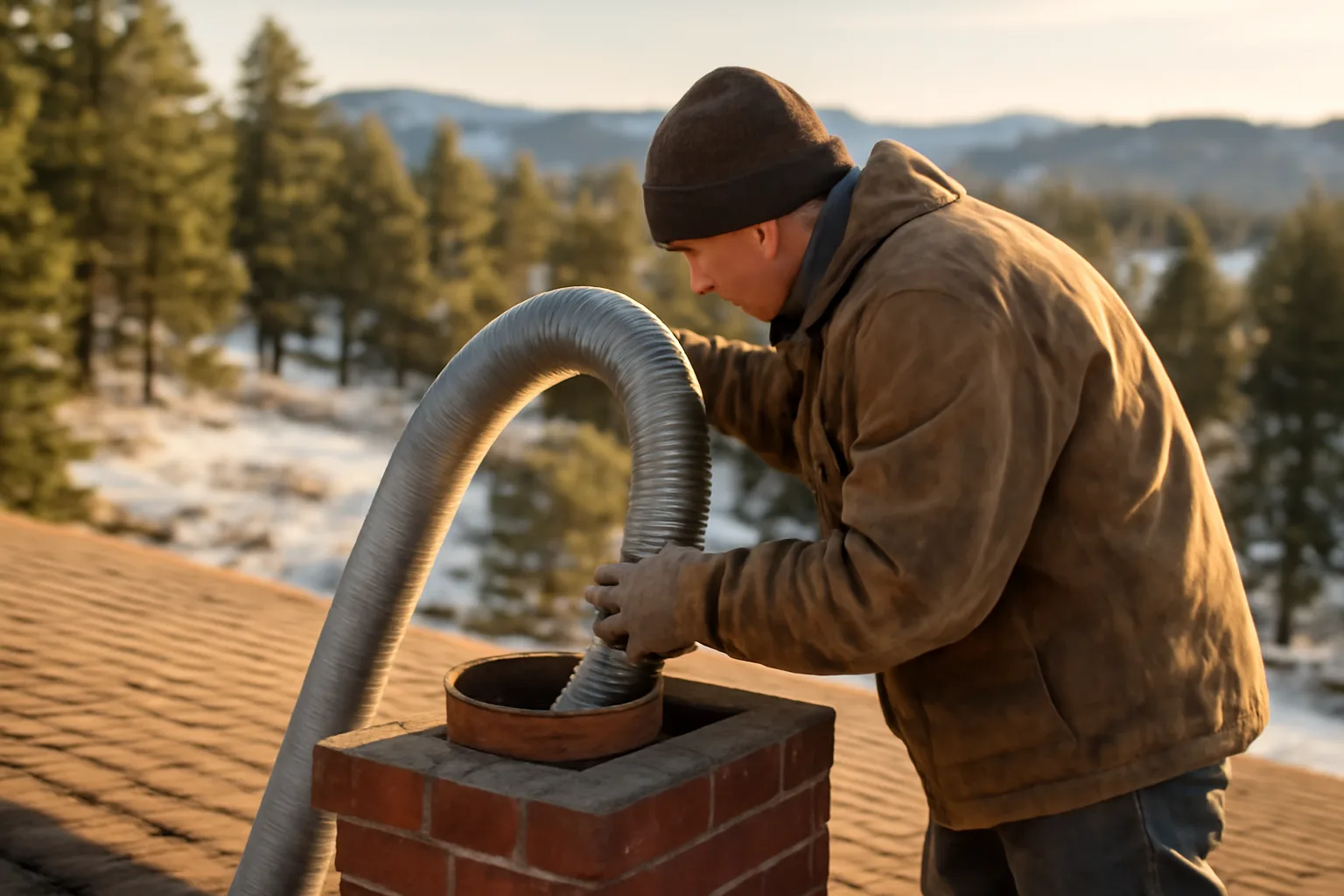
TL;DR
Colorado does not issue a statewide chimney liner license. Most jobs still need a local permit and, in cities like Denver, a contractor license. The liner has to meet IRC Chapter 10 and NFPA 211. The market sets the price, not the state. A clean stainless install is often a one-day job after the permit clears. Confirm every fee with your building department.
What does chimney liner renewal mean in Colorado?
Chimney liner renewal in Colorado means putting a code-compliant lining into an existing chimney and closing the job with the local building department. It is not a state license renewal. Colorado has no chimney liner license to renew.
People say renewal because clay tiles crack, stainless rusts out where the flue runs cold, and a stove shop will not connect a new insert to a ruined flue. Homeowners also hear the word relining from an insurer after a chimney fire. The work is one family of tasks. Size a listed liner to the appliance. Install it to the manufacturer's instructions. Get it inspected.
The paper path is local. Your city or county building department is the authority having jurisdiction. They adopt a version of the International Residential Code, often with amendments. [1] They decide whether your job needs a building permit, a mechanical permit, or both.
If you came from a state that mails a contractor card every two years, Colorado will feel blank. That blank is real. The Department of Regulatory Agencies does not run a chimney board. Plumbing and electrical are state licensed. Chimney lining is not. [6][7]
Climate still shapes the spec. Freeze-thaw pops crowns. High-country access can shut a roof down for a week. Mixed conifer firewood is often wetter than people admit, so creosote shows up fast when the flue is cold and oversized. None of that creates a state license. It does change whether a thin uninsulated liner is a stupid bid.
I treat renewal as a job type, not a credential. The credential, if any, is a city contractor license plus a permit number.
Do you need a license for chimney liner in Colorado?
No. You do not need a statewide license that says chimney liner, chimney sweep, or flue installer. Colorado does not issue one. Chimney lining is not a DORA-regulated profession.
You may need a local contractor license. Denver requires contractor licensing through Community Planning and Development. [8] Other home-rule cities run their own lists, exams, and insurance minimums. Some counties only want a permit and a certificate of insurance. Confirm with the building department that will inspect the flue. Do not assume unincorporated status means no paper.
If the scope includes gas piping or other work the state treats as plumbing, that part requires a Colorado plumbing license. DPO publishes the plumbing laws and rules. [6] Nobody gets to just hook up the gas log because they dropped the liner. Pull a licensed plumber or stay out of the gas.
Electrical add-ons need a licensed electrician. Draft inducers, chase lighting, and switched receptacles are not chimney-liner freebies. [7]
Private credentials such as a CSIA Certified Chimney Sweep card are useful. They are not Colorado licenses. I would still get CSIA if I were building a company, because commercial accounts and insurers ask. I would never tell an inspector that a CSIA card replaces a permit.
Watch for websites selling a fake Colorado chimney license. There is nothing to buy from the state for this trade. Spend that money on a camera and a listed liner.
Already hold a contractor registration in a city that offers one? Ask that same desk whether liner work sits inside your class. Get the answer in writing.
| Paper | Who issues it in Colorado | Required for a basic wood liner? |
|---|---|---|
| Statewide chimney liner license | Nobody. It does not exist. | No |
| Local contractor license | City or county (Denver and other home-rule cities) | Often yes inside those cities. Confirm. |
| Building or mechanical permit | Local building department | Usually yes |
| Plumbing license | Colorado DPO | Only if the scope is plumbing or gas piping |
| CSIA or NFI credential | Private groups | No. Useful, not a license |
Which Colorado agencies actually touch this work?
Your local building department is the agency that signs off a Colorado chimney liner job. They issue the permit and send the inspector. Denver stacks a contractor-licensing desk on top of that. [8]
Colorado DPO licenses plumbers and electricians. It does not license chimney liner installers. Use DPO only when your scope crosses into those trades. [6][7]
The state posts wood-smoke and residential-burning advisories. A new liner does not buy you a pass on a high-pollution day along the Front Range. [9]
The Division of Fire Prevention and Control supports fire codes for certain regulated buildings. It is not a chimney contractor board. Do not call them for a liner card they do not issue.
The Secretary of State files your LLC or corporation. Confirm the current filing amount on the SOS business pages. Do not trust a blog for the number. [12]
CDLE's Division of Workers' Compensation is in play the day you hire help. Colorado employers need workers' compensation coverage. [13]
Counties can adopt building codes under C.R.S. 30-28-201. That is why two adjacent counties can ask for different packets. [14]
EPA rules matter if you sell or install new wood heaters. New residential wood heaters have to meet federal emission standards. The liner still has to match the listing. [15]
Pick up the phone. Ask the permit tech which of these desks they actually coordinate with. Then ignore the rest until a job touches them.
What building codes apply to a chimney liner in Colorado?
Most Colorado jurisdictions adopt the International Residential Code for houses and the International Mechanical Code for mechanical work. Gas appliances also pull in the International Fuel Gas Code. [1][2][3]
IRC Chapter 10 is the chapter you will live in. The code states that masonry chimneys shall be lined, and the lining material has to match the appliance type under the terms of the listing and the manufacturer's instructions. [1]
That is the whole business in a few lines. Unlined masonry is not a finished system. The liner has to match the appliance, not your leftover coil.
IMC Chapter 8 covers chimneys and vents when the job sits in mechanical code territory. IFGC Chapter 5 does the same for fuel-gas vents. [2][3]
NFPA 211 is the specialty standard for chimneys, fireplaces, vents, and solid fuel-burning appliances. Manufacturers and many inspectors treat it as the detailed rulebook even when the adopted code is the IRC. [4]
Listed stainless lining systems are commonly evaluated to UL 1777. If the box is not listed, I would not put it in a permitted job.
Confirm the code edition your city adopted. A 2018 IRC town and a 2021 IRC town can differ on details. The edition is posted on the building department site. If it is not, ask. Local amendments hide in PDF bulletins. Read those before you bid a historic brick stack in a district with extra rules.
Heating fires show up in public data more than in shop talk. NFPA's home heating-equipment fire reports exist because flues, connectors, and appliances start a large share of those fires. [5] A liner that does not match the listing is how you join that pile.
How much does chimney liner cost in Colorado?
There is no official Colorado chimney liner price. The state does not publish an install fee schedule, and I will not invent one.
Material-only listed stainless kits often land in the high hundreds to low thousands of dollars, depending on diameter and length. Installed residential jobs in the broader U.S. market commonly land in the low thousands to several thousand dollars once labor, flashing, rain cap, damper plate, insulation wrap, and the permit are in. Tall mountain chases, 8-inch or larger wood-stove liners, and same-day masonry repair push the top end. Cast-in-place systems and full rebuilds cost more than a drop-in stainless liner. Nobody has a clean Colorado-only study I trust. Get three written bids and compare scope, more than the number.
Permit fees are local. Confirm them on that city's current fee schedule. Do not trust last year's blog post.
| Cost piece | Who sets it | How to confirm |
|---|---|---|
| Listed liner materials | Market and manufacturer | Quote with diameter, height, and listing |
| Labor and roof time | The contractor | Three written bids, same scope |
| Permit | Local building department | That city's current fee schedule |
| Contractor license | City licensing desk | That city's contractor page |
| State chimney license | Not issued | Do not pay anyone for one |
Insurance, winter access, and I-70 corridor drive time move contractor pricing more than any statute. If someone quotes a full lined chimney for a few hundred dollars installed, they are skipping the listing, the insulation, or the permit. Walk away.
A Colorado chimney liner bid should name the appliance, the listed system, the diameter, the open length, and whether tile demolition is included. If those lines are missing, the cheap number is fiction.
How long does chimney liner take in Colorado?
A straightforward stainless liner drop in an open, sound masonry flue is often a one-day site visit after the permit is in hand. Video inspection, tile demolition, offset bends, or a damaged crown add time. Weather on the Front Range and in the high country will stop roof work. Nobody honest guarantees a calendar.
The longer wait is usually the permit, not the stainless. Some departments turn a simple mechanical or fireplace permit in a few days. Others want listing sheets, a sketch, and a longer review. Confirm current processing with that building department. I will not quote a statewide turnaround because there is not one.
Waiting on a licensed plumber for a gas appliance hookup? Their book is a separate clock. [6]
Business paper should be done before you bid, not during the first job. SOS entity filing, the city contractor card if required, insurance certificates, and your written install instructions belong in the folder before you schedule the dumpster.
A camera survey the week you bid saves more calendar than any rush freight on liner. Hidden offsets are how a four-hour job becomes three days and an apology.
What permits and inspections does a liner job need?
Most Colorado jurisdictions treat a new liner as a building or mechanical permit item. The inspector wants a listed system installed to the manufacturer's instructions, proper clearances, a correct termination, and an appliance that matches the flue size. [1][2]
A Level 2 camera inspection before you bid is not a state law. It is how you avoid eating a hidden offset. Use a camera when the system is changing, after a fire, or anytime the flue is not open to daylight from cleanout to crown.
Final inspection happens after the liner is in and usually before the appliance is fired for the customer. Some towns want a rough look if you open the masonry. Ask when you pull the permit. Bring the listing sheet to the inspection. Inspectors should not have to guess the model.
Skipping the permit is how you lose the insurance claim after a flue fire. NFPA documents home heating fires year after year for a reason. [5]
Homeowners sometimes ask you to skip the permit to save a fee. That is a job you should decline. The fee is local and confirmable. The liability after a fire is not.
If the house sits in a historic overlay or a wildfire-hardened roof district, ask about extra submittals before you promise a date. Those desks move slower than a standard mechanical stamp.
What paper do you need for first-year operations?
If you are entering chimney liner work as a business, the state paper is ordinary business paper, not a trade license.
File an entity with the Colorado Secretary of State if you want an LLC or corporation. Confirm the current filing amount on the SOS fee schedule. I am not printing a fee here because those numbers move. [12]
Get a sales tax account if you sell materials. Local business licenses stack in some cities. Denver's contractor license is separate from a tax license. [8]
General liability insurance is not optional if you go on roofs. Ask the carrier, in writing, whether chimney and roof work sit inside the policy. A cheap office policy that excludes roof operations is a waste of money.
Workers' compensation is required if you have employees. CDLE explains employer duties. [13] I would not put a helper on a ladder until that policy is bound.
OSHA still applies on residential roofs. Fall protection kicks in at 6 feet in construction. The rule says: "Each employee engaged in residential construction activities 6 feet (1.8 m) or more above lower levels shall be protected by guardrail systems, safety net system, or personal fall arrest system unless another provision in paragraph (b) of this section provides for a greater level of protection." [11]
Written manufacturer instructions, listing labels, and as-built photos belong in every job file. Inspectors ask. So do insurers after a claim.
I would rather spend first-year cash on a good camera, fall gear, and insurance than on a van wrap. The wrap does not pass inspection.
Should you reline or rebuild a Colorado chimney?
A liner is the right call when the masonry structure is sound and the flue path can accept a listed system sized to the appliance. A rebuild is the right call when the chimney is leaning, the chase is burned, the crown and brick are failing in freeze-thaw, or you cannot get a listed liner through the offsets.
Colorado freeze-thaw and wind-driven snow punish bad crowns. If the structure is junk, a pretty liner inside junk is still junk.
Look at the chase, the flashing, the smoke chamber, and the cleanout before you sell stainless. A cracked smoke chamber will leak even after a perfect drop. Tell the owner that before they pick a color of cap.
Want a side-by-side paper checklist for liner-versus-rebuild decisions? ChimneyLinerPath publishes a $149 one-time Liner vs Rebuild Kit. It is a reference, not a permit and not a license.
Compare notes with how other states handle the same fork. The code language is similar even when the license story is not. See chimney liner renewal in Arizona and chimney liner renewal in Idaho.
How do wood, gas, and pellet appliances change the liner?
Wood stoves and inserts need a flue sized to the listing, usually insulated stainless in an oversize masonry flue. Wet wood makes creosote. EPA Burn Wise tells people to burn dry wood in a maintained system, which is boring advice and still right. [10]
Front Range wood burning is restricted on high-pollution days. Colorado posts wood-smoke advisories. A new liner does not exempt a stove from a no-burn day. [9]
New wood heaters sold in the United States have to meet EPA residential wood heater standards. The liner still has to match that appliance listing. Do not upsize the flue because a homeowner wants a bigger fire. [15]
Gas appliances follow the IFGC and the appliance listing. [3] Many gas fireplaces use a specific vent, not a generic wood liner. Wrong liner on gas is a carbon monoxide problem. Treat any gas piping as licensed plumbing work unless the local AHJ and DPO tell you otherwise in writing. [6]
Pellet vents are another listed system. Do not treat them like a wood liner. The termination, the joints, and the cleanouts are different.
High altitude changes appliance ratings. A lot of Colorado sits above 2,000 feet. Read the rating plate and the high-altitude kit notes before you cut the first length of liner.
What usually gets a chimney liner job red-tagged?
Inspectors red-tag unlisted materials, undersized liners, missing insulation wrap when the listing requires it, poor terminations, and appliances that do not match the flue. They also red-tag work done without a permit.
Another failure is venting a gas water heater and a wood stove into the same flue. Code does not like that mix. [1][2][3]
Work without fall protection and someone gets hurt? That is not a building-department problem. That is OSHA and your insurance. [11]
I have no patience for "the last guy never pulled a permit." The last guy is not on your policy. Bring the listing sheet, photos of the termination, and the permit card to the final. Make the inspector's job easy and you get fewer callbacks.
How does Colorado compare to other states on liner paper?
Colorado is a local-control state for this trade. There is no state chimney card to renew. Cities and counties run the desk. That is closer to several western states than to a heavy state-contractor model.
California cities can be heavier on contractor classifications. Arizona and Idaho also lean local for chimney work, with their own permit desks. If you already run jobs in those states, steal their job-file habits and then read the Colorado city amendments.
See chimney liner renewal in California, chimney liner renewal in Illinois, chimney liner renewal in Alaska, and chimney liner renewal in Hawaii.
Illinois has a different state-versus-city mix. Alaska and Hawaii add climate extremes that change materials more than licenses. Steal the inspection checklist habit from every one of them. Do not copy a fee you read on another state's site.
Frequently asked questions
Do you need a license for chimney liner in Colorado?
No statewide chimney liner license exists. Colorado DPO does not license this trade. You may still need a city contractor license (Denver does) and you usually need a local building or mechanical permit. Gas piping is licensed plumbing. Confirm with the building department that will inspect the job.
How much does chimney liner cost in Colorado?
The state does not set a price. Material-only listed stainless kits often run from the high hundreds into the low thousands. Installed jobs commonly land in the low thousands to several thousand dollars once labor, flashing, wrap, and the permit are in. Rebuilds cost more. Get three written bids and confirm permit fees on the city's schedule.
How long does chimney liner take in Colorado?
A clean stainless drop in a sound, open flue is often one day on site after the permit prints. Tile demolition, offsets, crown repair, and weather add time. Permit review is the usual wait, and it varies by city. Confirm current processing with that building department. There is no statewide clock.
Is CSIA certification a Colorado license?
No. CSIA and NFI credentials are private. Insurers and some commercial accounts like them. They do not replace a Denver contractor license, a county permit, or a Colorado plumbing license when the scope includes gas. I would still get CSIA if I were building a company. I would not wave it at an inspector as a permit.
Do I need a permit to reline a chimney in Denver?
Treat it as a permitted job unless Denver's building desk tells you otherwise in writing for that exact scope. Denver also runs contractor licensing through Community Planning and Development. Confirm both the permit type and whether your contractor class covers liner work before you schedule the roof.
Can a homeowner install their own chimney liner in Colorado?
Some jurisdictions allow owner-builder permits on a homestead. Many do not want an owner on a two-story flue with a listed system. Rules vary by city and county. Even where an owner permit exists, the liner still has to meet the adopted IRC and the listing. Ask the local building department before you order pipe.
Does a stainless liner need to be UL listed?
For a permitted job, use a listed lining system and install it to the instructions. Stainless residential lining systems are commonly listed to UL 1777. Unlisted coil from a random catalog is how you fail inspection. Match diameter and insulation to the appliance listing, not to whatever is on sale.
What if I only work in unincorporated counties?
You still may need a county permit. C.R.S. 30-28-201 lets counties adopt building codes, and many have. Some rural desks are lighter than Denver. Some are not. Call that county building department, ask what they want for a flue liner, and keep the email. Do not assume rural means no paper.
Do gas fireplace liners require a plumber?
The liner install and the gas piping are different scopes. Gas piping is licensed plumbing work under Colorado DPO rules. A chimney tech should not "just hook up" a gas log. Use a licensed plumber for gas, and use the IFGC plus the appliance listing for the vent. Confirm both with the local AHJ.
Are wood-burning restrictions a liner issue?
A liner does not exempt a stove from a Front Range no-burn day. Colorado posts wood-smoke advisories. New wood heaters also have to meet EPA emission rules. Tell the customer both facts when you sell a wood insert. The flue can be perfect and the burn can still be illegal that afternoon.
What insurance do chimney liner contractors carry?
Carry general liability that names chimney and roof work in writing. Add workers' compensation the day you have employees. CDLE explains the employer duty. Ask the carrier about height limits and hot-work exclusions. A cheap office policy that excludes roofs is a waste of money.
How do I confirm local rules before I bid?
Call the building department that will inspect that address. Ask the code edition, the permit type, whether they want a contractor license number, and what listing sheets to attach. Confirm current fees on their schedule. Do not use another city's packet. Write down the clerk's name and the date.
Is a clay tile repair treated the same as a full liner?
A single tile swap can still be a permitted repair. A full listed stainless or cast-in-place system is a different submittal. Inspectors care about the listing and the appliance match either way. Camera the flue first. Selling a full liner when three tiles and a crown would do the job is a good way to lose the next referral.
What happens if you skip the permit?
The inspector can red-tag the work. An insurer can deny a fire claim. The owner can make you open the flue again. The permit fee you tried to dodge is smaller than any of those outcomes. Pull the permit. Keep photos. Put the listing sheet in the file.
Sources
- ICC International Residential Code 2021, Chapter 10 Chimneys and Fireplaces: IRC Chapter 10 requires masonry chimneys to be lined and the lining to match the appliance listing and manufacturer's instructions.
- ICC International Mechanical Code 2021, Chapter 8 Chimneys and Vents: IMC Chapter 8 sets construction and venting rules for chimneys and vents used with mechanical appliances.
- ICC International Fuel Gas Code 2021, Chapter 5 Chimneys and Vents: IFGC Chapter 5 governs chimneys and vents serving fuel-gas appliances.
- NFPA 211 Standard for Chimneys, Fireplaces, Vents, and Solid Fuel-Burning Appliances: NFPA 211 is the specialty standard covering design, installation, and maintenance of chimneys, fireplaces, vents, and solid-fuel appliances.
- Colorado DPO, Plumbing Laws, Rules and Policies: Colorado licenses plumbers at the state level through DPO and publishes the statutes and rules that control plumbing work, including gas piping scopes.
- Colorado DPO, Electrical Laws, Rules and Policies: Colorado licenses electricians at the state level through DPO for electrical work such as inducers and chase wiring.
- Colorado Department of Public Health and Environment, Air Pollution Control Division: Colorado posts wood-smoke and residential burning advisories that restrict wood heating on high-pollution days.
- U.S. EPA Burn Wise, Best Wood-Burning Practices: EPA Burn Wise guidance calls for dry wood and a properly maintained wood-burning system.
- OSHA 29 CFR 1926.501 Duty to have fall protection: Residential construction employees 6 feet or more above a lower level must have guardrails, a safety net, or personal fall arrest unless a stricter paragraph (b) provision applies.
- Colorado CDLE, Division of Workers' Compensation, Employers: Colorado employers are responsible for workers' compensation coverage, with duties explained by CDLE's Division of Workers' Compensation.
- C.R.S. 30-28-201, county building codes (Justia): Colorado counties may adopt building codes, so liner permit rules vary by county.
- U.S. EPA, Residential Wood Heaters: New residential wood heaters sold in the United States must meet federal emission standards.